Deadlines aren’t about bossing the couple around. They’re how I make sure the stress during wedding week has nothing to do with me or the ceremony.
One of the fastest ways to make officiating stressful is to leave everything open ended. The couple still hasn’t picked a reading. Their vows are coming “soon.” Nobody remembers who bought the unity-candle supplies. Then suddenly it’s Thursday and the wedding is Saturday.
I’ve officiated more than 1,000 weddings, and I learned a long time ago that being easygoing doesn’t mean having no deadlines. Couples usually appreciate a process that gets decisions off their plate before wedding week.
Here’s the timeline I use as a starting point.
I generally give the couple about two weeks. They can change things later, but making the first round of choices gets the process moving.
If they’re finding something I didn’t provide, I want it early enough to read it, place it properly and make sure it works in the ceremony.
Most couples approve it without changes. The point is to catch the rare change of heart before it becomes a wedding week rewrite.
Date, start time, venue, wedding colors, ceremony details and anything that may have changed since you first talked.
If they’re writing their own, I want a copy as backup and a chance to catch a huge imbalance before they read them in front of everyone.
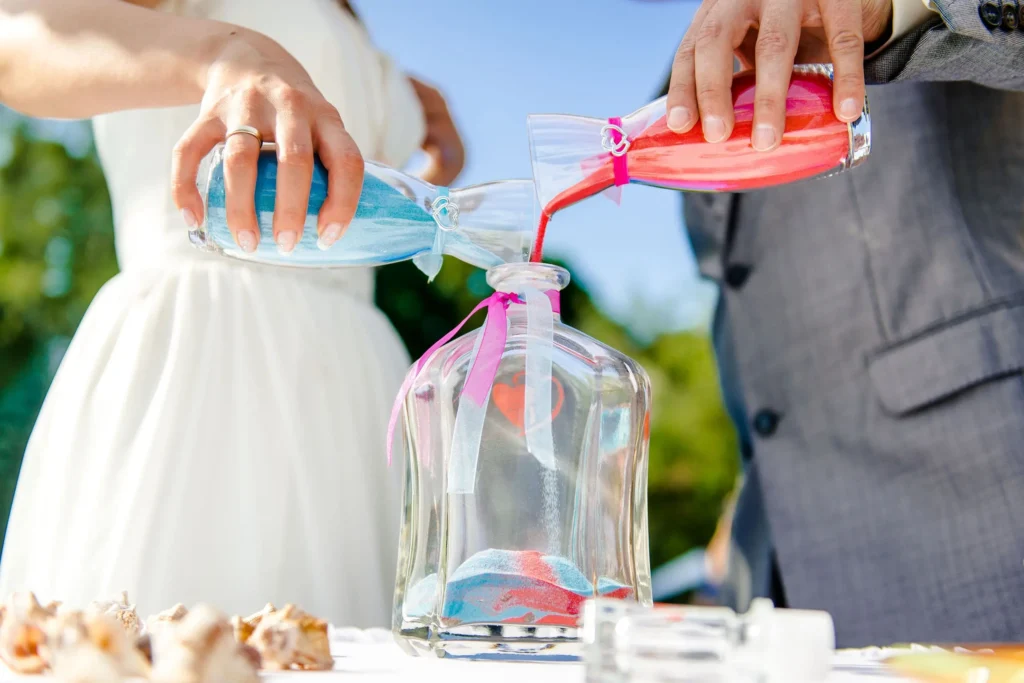
Marriage license, rings, vows and any supplies for a unity ceremony. Simple, useful, done.
Give the couple deadlines without making them feel like homework
The wording matters. I don’t send a list of demands. I explain why I’m asking for something by a certain date.
The couple has hired or asked you to do an important job. They want you prepared. A deadline tells them what you need in order to be prepared, and it gives them one less unfinished task floating around in their heads.
I tell couples some version of that directly. It changes the deadline from something the officiant wants into what it really is: something that makes their lives easier.
Get ceremony choices moving early
If you’re giving the couple ceremony material to choose from, don’t hand it over and say, “Whenever you get a chance.” That’s how you end up chasing it.
Give them a reasonable date for the first pass. I like about two weeks. Make it clear that nothing is carved in stone and they can change their minds later.
You’re trying to get the big decisions made while everyone still has room to think.
Put a deadline on material they find themselves
Couples sometimes want a reading, prayer, poem or other piece that isn’t part of the material you provided. Great. Just don’t let “we’re still looking” continue until two days before the wedding.
I generally ask for outside material about 30 days beforehand. I may not need 30 days to work with it, but that’s not really the point. The buffer protects everyone from procrastination.
Send the finished ceremony back for approval
I send the ceremony to the couple for one final look before the wedding. Thirty days out is a comfortable target for me.
Most of the time I get a thumbs up and nothing changes. Occasionally somebody decides a reading no longer feels right or they want to change a piece of imagery. I’d much rather learn that with a month to spare.
Don’t forget the physical stuff
If the ceremony includes a unity candle, wine box, letter box, blessing tree or anything else that requires supplies, put a reminder on your calendar.
People can spend months thinking about the meaning of a unity ceremony and still forget they need to actually buy the thing.
I have a separate guide with wedding unity ceremony ideas if the couple is still deciding what fits them.
Get personal vows before wedding week
If the couple is writing their own vows, I ask for them about two weeks ahead of time.
First, I can keep a backup copy in my ceremony book. Second, I can spot a major mismatch. One person may have written two heartfelt pages while the other has four sentences and three jokes.
They don’t need matching word counts, but if the difference is going to feel awkward, I’d rather give them a quiet warning beforehand.
Confirm the details you think couldn’t possibly change
About two weeks before the wedding, I confirm the date, ceremony start time, venue and wedding colors. I’ve been left out of the loop when details changed before.
Never assume the information you wrote down six months ago is still the information everyone is using today.
Protect the marriage license
If you’re responsible for returning the signed marriage license, make a copy or take a clear photo before it leaves your hands.
I’ve had licenses go missing in the mail. It’s rare, but one experience is enough to make the extra 15 seconds worthwhile.
Marriage-license rules vary by location, so make sure you understand what the couple’s issuing authority requires and who is responsible for returning it.
The point isn’t more rules. It’s less stress.
Your sanity matters too. You want to show up with your A-game, and that gets harder when you’re still assembling pieces at the last minute.
Good follow up makes you look organized because you are organized. More importantly, it lets the couple reach wedding week knowing the ceremony is handled.
That’s the goal. By the time the wedding arrives, I want the couple thinking about getting married, not wondering whether I have their vows.
Want the ceremony process already built?
My Ceremony Material gives you more than 70 selections to build the ceremony, and the training bundle adds the process I use to prepare, rehearse and deliver it.
What to read next
Common questions
When should an officiant ask for the couple’s ceremony choices?
I like to get the first round of ceremony choices back within about two weeks of giving the material to the couple. They can make changes later, but an early deadline keeps the process moving.
When should couples send personal vows to the officiant?
About two weeks before the wedding works well. It gives the officiant a backup copy and enough time to flag a major imbalance or practical problem without creating last minute stress.
When should the officiant send the final ceremony for approval?
I generally send it about 30 days before the wedding. Most couples approve it without changes, but the buffer gives everyone time if they do want to adjust something.
Should an officiant keep a copy of the marriage license?
If you’re responsible for returning the signed license, take a clear photo or make a copy before sending it. Follow the rules of the issuing authority for the actual filing process.