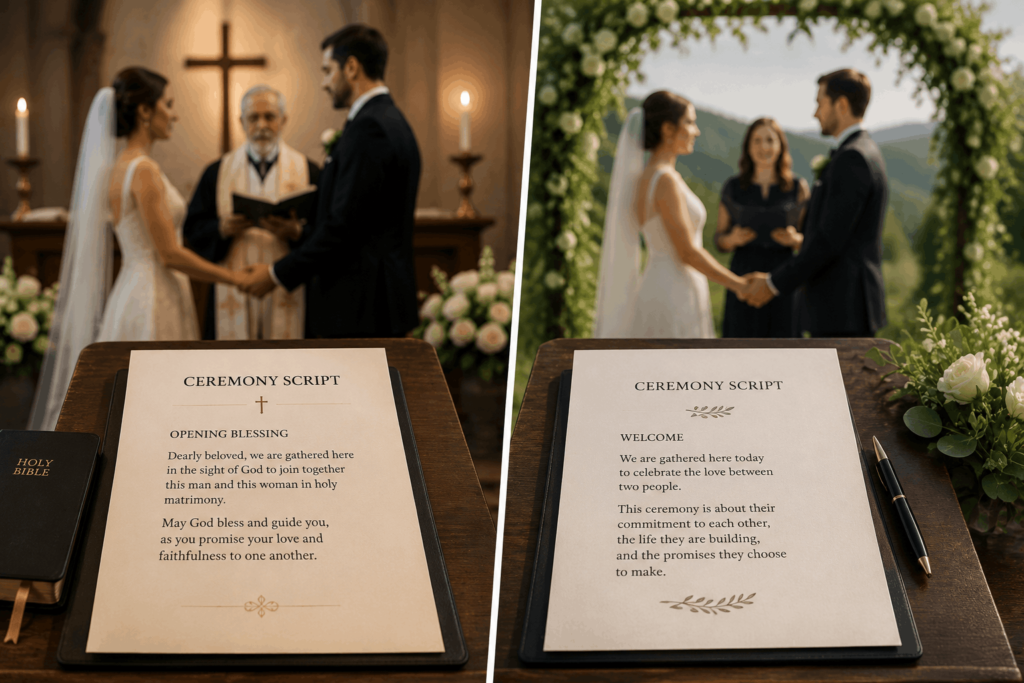
First time officiating a wedding?
You don’t need to look like you’ve officiated 1,000 weddings. You just need to avoid the handful of mistakes that make it obvious this is your first one.
Most first time wedding officiant mistakes aren’t about the ceremony script. They’re little things that happen around it. You forget to tell the guests to sit down. The microphone slowly drops to your chest. You sign the marriage license in the wrong spot. None of these are disasters, but they’re all avoidable.
I’ve made some of these mistakes myself. I’ve also watched plenty of new officiants make them. That’s why I teach this stuff. The goal isn’t to turn you into a professional wedding officiant. It’s to help you look comfortable, keep the ceremony moving, and let the couple enjoy the moment instead of wondering what they’re supposed to do next.
7 first time wedding officiant mistakes to avoid
Running late
Check traffic before you leave and give yourself more time than you think you need. Walking into a wedding already stressed is a lousy way to start.
I want time to find the coordinator, meet the DJ, check the microphone, say hello to the couple if they’re available, figure out who has the rings, and stand around doing absolutely nothing for a few minutes. That’s much better than running through a parking lot in a suit.
Forgetting to tell the guests to rise
When the final person in the processional is about to walk down the aisle, turn to the guests and say, “Please rise.”
It sounds obvious until you’re standing in front of 150 people with your heart pounding and your brain is focused on the first sentence of the ceremony.
Forgetting to tell everyone to sit back down
Once the couple is in place, give the guests a second to settle and say, “Please be seated.”
I’ve seen officiants start the ceremony while the entire room is still standing. The guests don’t know if they’re supposed to sit, so they just stay there. Give people clear instructions and they’ll happily follow them.

Letting the microphone drift away from your mouth
Do a sound check with the DJ before guests arrive and find a volume that feels comfortable. Then keep the microphone near your mouth.
People naturally lower a handheld mic as they get comfortable. You won’t notice yourself doing it. The guests in the back will.
If people can’t hear you, it doesn’t matter how good the ceremony is.
Looking at the page instead of the couple
You don’t need to memorize the ceremony. I don’t. But you should practice it enough that you can look up.
Read a sentence, look at the couple, look at the guests, then come back to the page. Pauses feel much longer to you than they do to everyone else. A two second pause makes you look comfortable and gives an important sentence a chance to land.
If you’re nervous, squeeze your feet inside your shoes and take a full breath. Nobody can see you doing it, and it brings you right back into the room.
Forgetting the final guest cue
Before the pronouncement and kiss, ask the guests to rise again. It gets everyone involved and gives the ending some energy.
After the kiss, let the couple lead the recessional, followed by the wedding party and parents. Then you can head out.
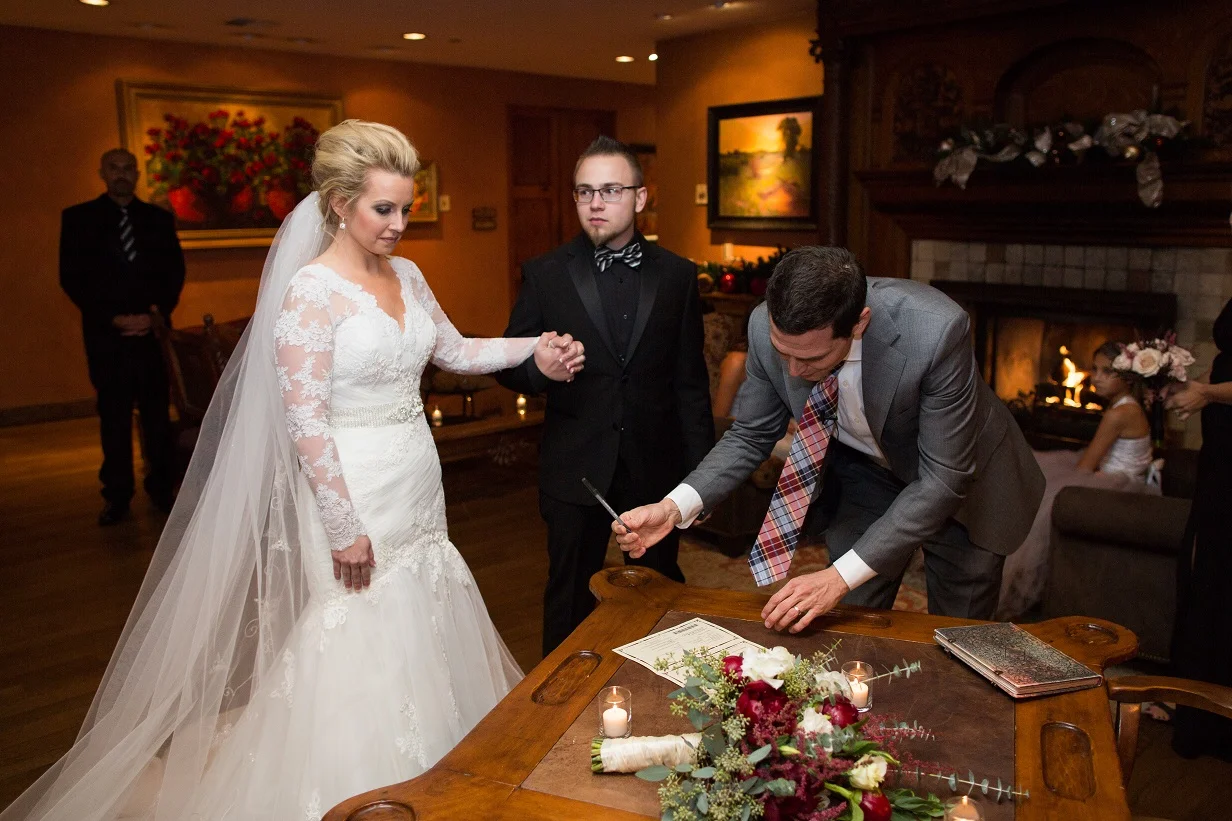
Writing the wrong information on the marriage license
Read the license carefully before your pen touches the paper. Check the date, city, county if it’s required, and exactly which lines belong to you.
I’ve written the wrong date. I’ve written the right information in the wrong place. It’s a pain in the butt, and it’s a terrible way to end a ceremony that just went perfectly.
The marriage license is the legal part of the job. Treat it that way.
What I say as I’m walking out
Guests often have the same question the second the ceremony ends. Where do we go now?
I usually say something like, “We’re going to sign their marriage license and then Bride and Groom will be snapping photos, but we invite everyone to start the party during cocktail hour and they can’t wait to join you soon. Have a great night!”
That takes five seconds, sends everybody in the right direction and buys the couple a little breathing room before photos.
The easiest way to look experienced
Preparation.
That’s really it. Know the ceremony. Practice it out loud. Know where you’re supposed to stand. Know who has the rings. Know what happens with the marriage license. Do a sound check. Then stop worrying about looking like a wedding officiant and pay attention to the two people standing in front of you.
People can tell when you’re present. They can also tell when you’re reading words you’ve barely looked at before.
You were asked to officiate because the couple trusts you. Be prepared enough that once the ceremony starts, you can enjoy it with them.
Get the rehearsal guide
Enter your email to get my printable rehearsal guide plus more practical officiant tips, readings and wedding day advice.
Download rehearsal guide
No spam. Unsubscribe anytime.
What to read next
Want the ceremony handled too?
My ceremony material gives you more than 70 selections for welcomes, readings, vows, ring exchanges, unity ceremonies and pronouncements. Pick what fits the couple, put it in order and make it theirs.
First time officiant questions
Is it normal to be nervous officiating your first wedding?
Absolutely. Practice the ceremony out loud until the words feel familiar. You don’t need to memorize it. You need to know it well enough to look up, breathe and stay connected to the couple.
When should I arrive at the wedding?
Give yourself enough time to meet the coordinator and DJ, do a sound check, confirm who has the rings and get comfortable before guests are seated. Earlier is always better than rushing in stressed.
When do I tell wedding guests to rise and sit?
Ask guests to rise for the final processional entrance, seat them once the couple is in place, and ask them to rise again before the pronouncement and kiss.
Do I need to memorize the wedding ceremony?
No. Practice enough that you can look up regularly instead of burying your face in the page. The goal is connection, not memorization.
What should I check before signing the marriage license?
Read the entire document first. Confirm the date, location and which fields belong to the officiant before writing anything.