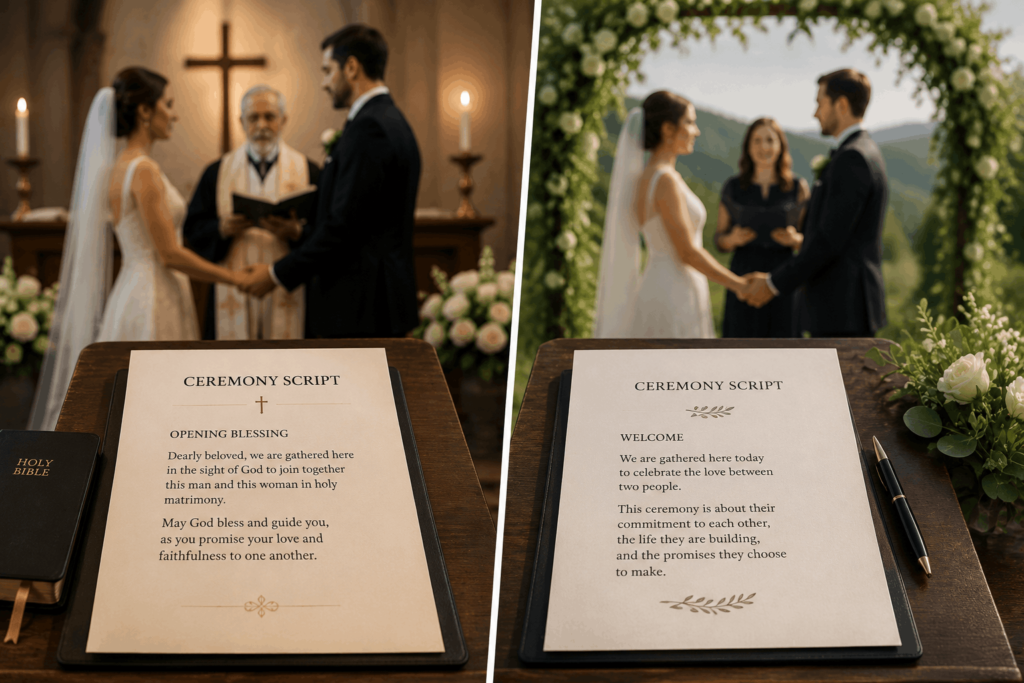
Wedding unity ceremony ideas
Unity ceremonies are one of the easiest ways to make a wedding ceremony feel personal, memorable, and visually engaging. They give guests something to connect with, they create great photo moments, and they help first time officiants add symbolism without having to reinvent the whole ceremony.
I originally wrote this guide for Honeyfund, where it was published for couples planning their weddings. I’ve since expanded my original article here with more examples, clearer scripts, audio, video, and what I’ve learned from actually leading these moments at weddings.
Why unity ceremonies work so well
Wedding ceremonies can be beautiful, but they can also feel long or predictable when every ceremony follows the same pattern. A unity ritual breaks that rhythm in a good way. It gives the officiant something visual to narrate, gives the couple a keepsake or shared experience, and gives the guests something to actually watch.
Some unity traditions come from specific religious or cultural backgrounds, while others are completely modern. Catholic couples often light a unity candle. Jewish couples may share wine or break the glass. Irish couples may ring the bell of truce. Other couples create something unique around their own story. The best unity ceremony ideas are the ones that feel natural for the people standing in front of you.
Get the rehearsal guide
Enter your email to get Matt’s rehearsal guide plus officiant tips, readings, and practical wedding day advice.
Download rehearsal guide
No spam. Unsubscribe anytime.
Traditional unity ceremony ideas
Unity candle
The unity candle is usually associated with Catholic weddings, yet the symbolism works just as well in nonreligious ceremonies. Two smaller candles represent each person’s individual life. The couple uses those flames to light one central candle that represents their shared life together.
You can keep the wording simple and still include parents in a way that feels meaningful without turning the moment into a sermon.
“[Name] and [Name] have chosen to symbolize their commitment by lighting the unity candle. For those of you who are not familiar with the unity candle, it represents two lives becoming one through marriage.”
“They have asked their mothers to light the outside candles because they lit their lives. It is an expression of love and a way of saying thank you to all of their parents for bringing them to this amazingly special point in their lives.”
“Together, [Name] and [Name] will now light one candle from two smaller candles as they acknowledge their union in marriage. As their individual flames come together, the single flame burns much brighter, symbolizing their strength together. By allowing the smaller candles to remain lit, they also honor each other as unique individuals.”
That is usually enough. It explains the symbolism, includes the parents if needed, and keeps the ceremony moving.
Glass stomp
Jewish weddings can be especially memorable because they often include more than one symbolic act. Sharing wine, dancing the Horah, and breaking the glass all bring energy and meaning into the ceremony. The glass stomp is one of the most recognizable moments and it works well because the officiant can explain it quickly and then let the crowd take over with the cheer.
Here is a clean way to frame it.
“Before I pronounce [Name] and [Name] married, they would like to honor the Jewish tradition and break the glass. Traditionally this marks the beginning of the wedding celebration, but it also symbolizes the transformation taking place today and reminds us of the fragility of life.”
“The glass is broken to protect their marriage with the implied prayer that as this glass shatters, so may their marriage never break. After the glass is broken, we invite everyone to cheer and shout the Hebrew words Mazel tov, meaning good luck and congratulations.”
My guide to breaking the glass at a Jewish wedding covers the setup and what to say before the stomp.
Glass stomp audio
Wine or champagne sharing
Wine sharing is another tradition that started in religious settings but now shows up in many modern nonreligious weddings. Many couples love wine, got engaged in wine country, or just want something elegant and easy to understand. Others swap wine for champagne, whiskey, tequila, or even a black and tan if that feels more like them.
I usually describe it this way.
“[Name] and [Name] have chosen to commemorate their marriage by sharing wine. Throughout history in nearly all cultures and traditions, sharing wine or champagne has been used as a universal and central act during significant moments.”
“Wine is the result of years of hard work, the tender care of the grape, a thoughtful mix of ingredients, the patient fermenting process, and the unique flavors of each year, just like relationships. Today they share their first glass together as a married couple not only to celebrate all that has taken place up to this point, but as an expression of hope and faith in the harvest of their lives.”
“As you share this wine, so may you share all things from this day on with love and with understanding.”
Wine sharing audio
Nonreligious unity ceremony ideas
Wine box
If your couple loves wine and wants a symbolic moment that turns into a future anniversary tradition, the wine box is a strong option. A bottle of wine and two personal letters are placed into a wooden box to be opened later, often on the first anniversary.
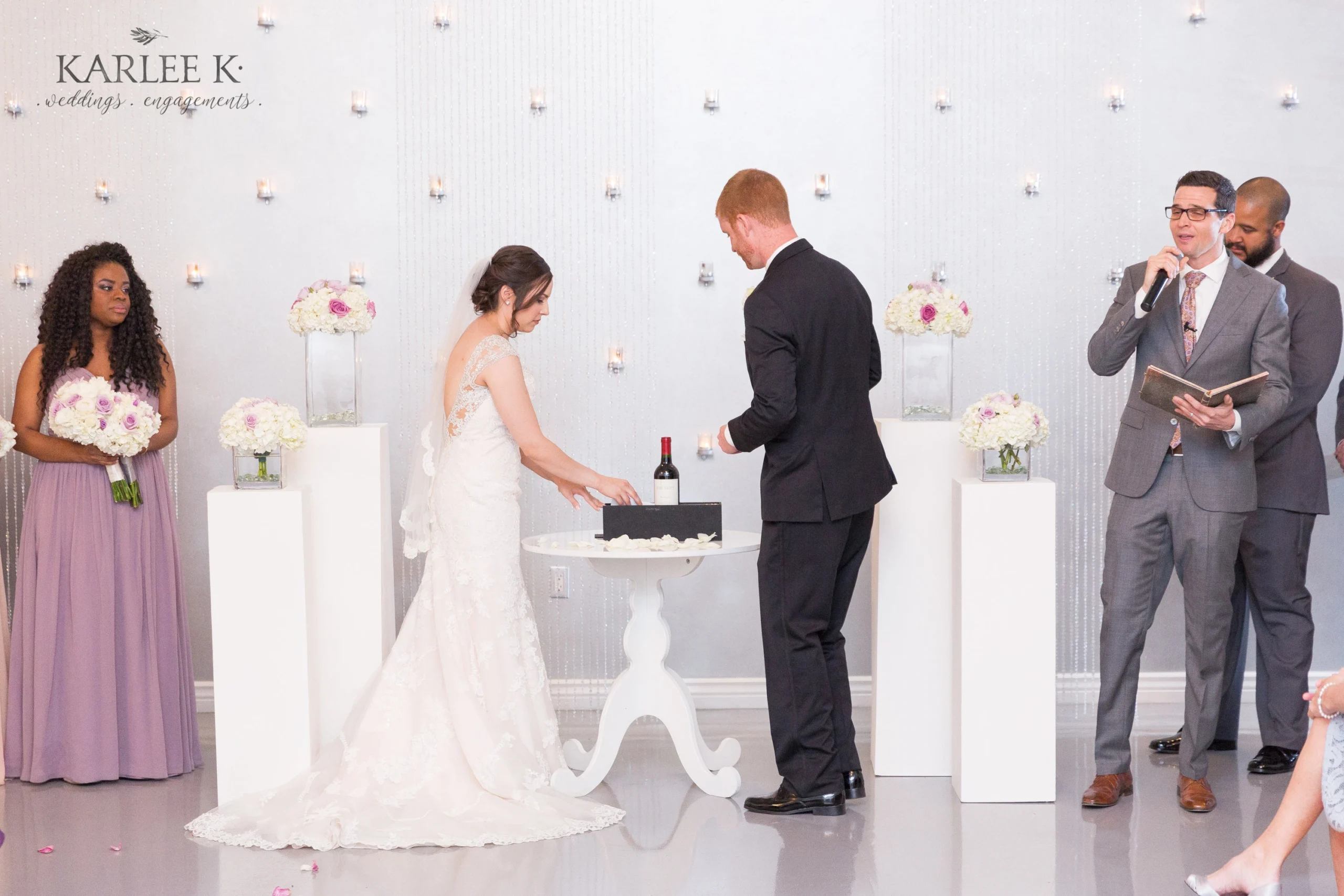
You might say, “[Name] and [Name] have written each other love letters and they will be placed in this box along with a bottle of wine to be read and shared on a future anniversary. They are setting these things aside as an expression of hope, memory, and faith in the years ahead.”
This works even better when paired with a letter box, where family also contributes written blessings or advice.
Unity sand ceremony
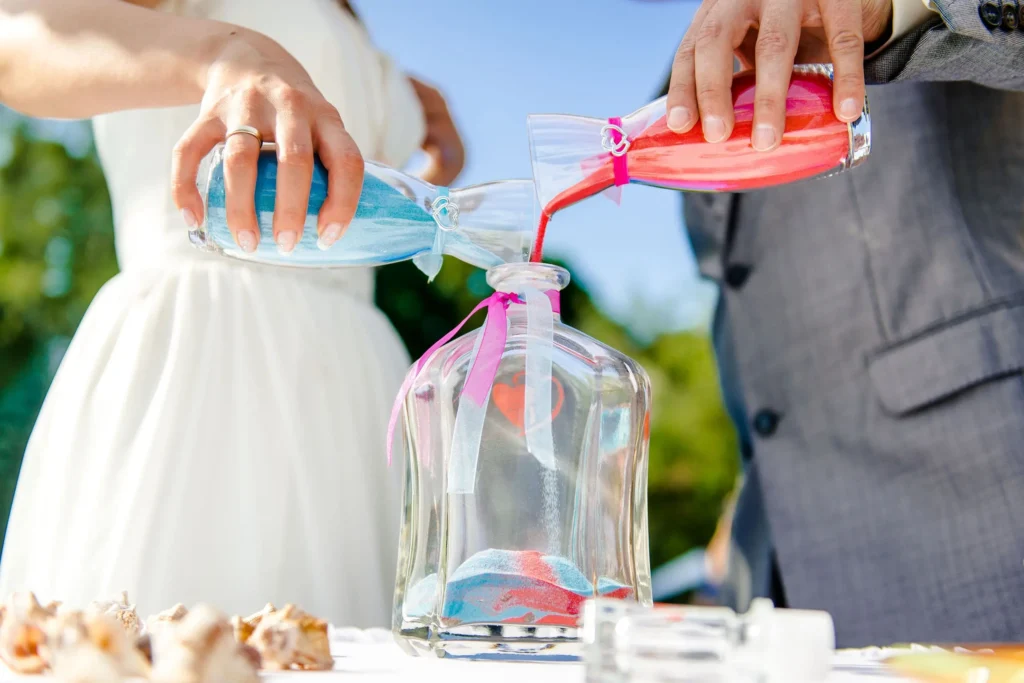
One of the most popular wedding unity ceremony ideas is blending sand. Most couples use different colors so the vessel has visible layers, but the ritual can also be customized around a meaningful place or shared memory. One of my favorite examples involved sand from the golf course where the couple met. They used the same sand to symbolize that their lives were never really separate, just reunited.
Here is a simple version of the script.
“[Name] and [Name] have chosen to commemorate their marriage by blending sand. For those of you who are not familiar with the sand ceremony, it is meant to represent separate lives coming together as one.”
“The separate containers of sand represent their lives before today. Each grain represents every memory and experience they have had individually, as well as the life they will build together from this day forward.”
“As these containers are combined, the sands are joined together and are not easily separated again, just as their marriage and their lives will now be joined.”
This is also one of the best options for blended families because children can each pour their own color and become part of the symbolism.
If you’re officiating one, my unity sand ceremony guide walks through the setup and what to say while the couple pours.
The letter box
The letter box gives family and close friends a way to speak into the marriage without having to stand up and read something aloud during the ceremony. Family members write letters that go into the box. The couple adds their own letters to each other and agrees on when those will be opened in the future.
I usually introduce it by inviting grandparents, then parents, then siblings, then the couple themselves to place their letters into the time capsule while music plays softly in the background. It creates a meaningful pause in the ceremony and often becomes one of the most emotional moments of the day.
Unity ceremony ideas with guest participation
Giving flowers and hugs
Presenting flowers to mothers and grandmothers, along with hugs for fathers and grandfathers, is one of the easiest ways to turn any unity ritual into something even more memorable. Couples often feel deep gratitude toward their families, and this is a simple surprise that lands emotionally and photographs beautifully.
You might say, “Before [Name] and [Name] exchange their vows and rings, they have requested the opportunity to surprise their moms with flowers and their dads with hugs because they love you all so much. Thank you for bringing them to this amazingly special point in their lives.”
Butterfly release
Butterfly releases are another way to involve the guests directly. Each guest can have a small container on their chair, or the couple can release several together from the front. The symbolism usually centers on new beginnings, freedom, hope, and collective wishes for the marriage.
Butterfly release audio
Stone blessing
The stone blessing works especially well for couples who love the outdoors or want something grounded and tactile. Guests hold a stone during the vows and rings, think positive thoughts or prayers for the couple, and then place the stone into a common vessel as they leave. The couple keeps the collection afterward as a physical reminder of the people who showed up to support them.
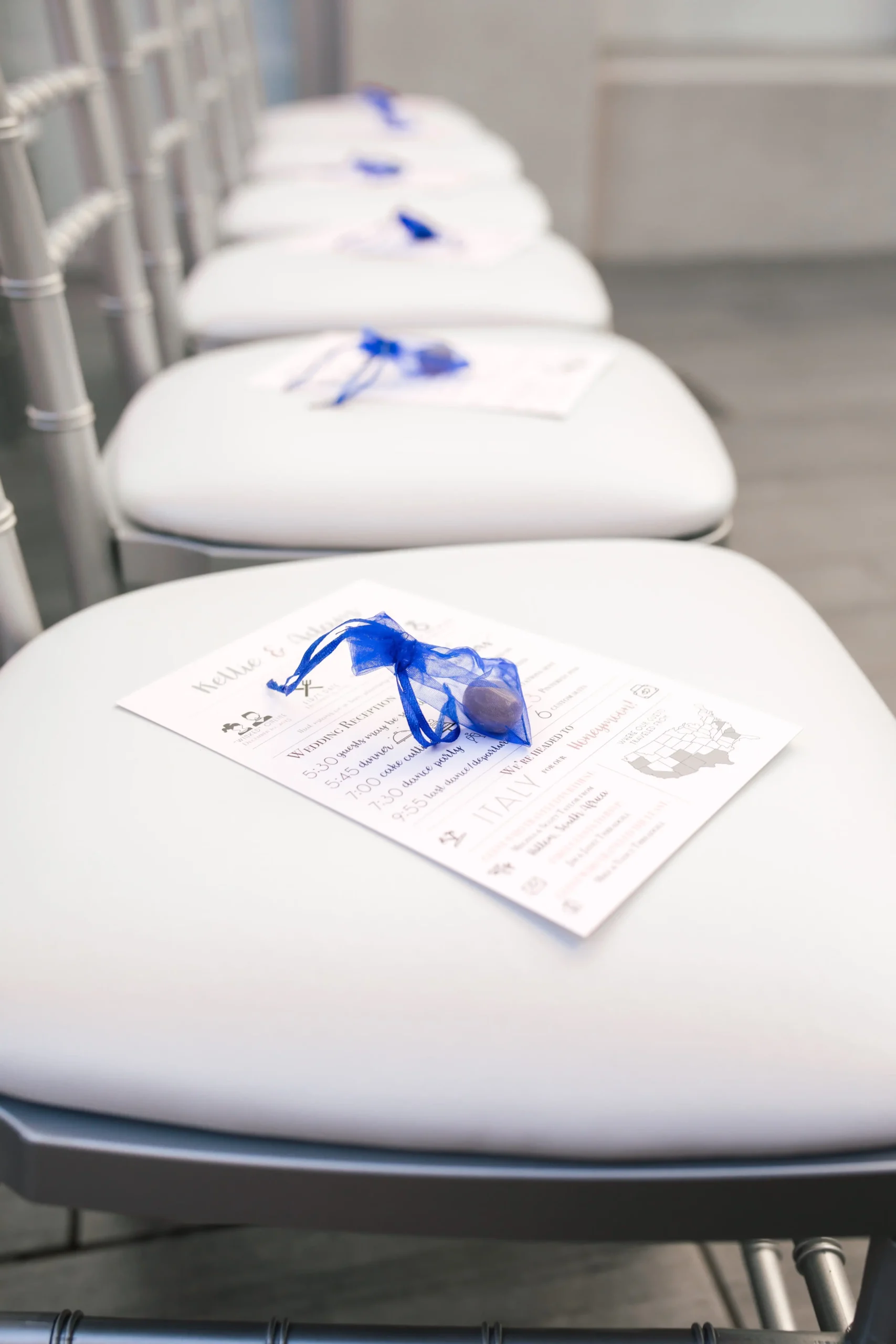
I usually say, “Hopefully you noticed the stone on your chair. As [Name] and [Name] exchange vows and rings, we invite you to hold that stone and think about all the amazing possibilities that await them. Send those positive thoughts into your stone and then place it into the vase or box on your way out.”
Stone blessing audio
Unique unity ceremony ideas
Sometimes the easiest way to make a unity ritual stand out is not the object itself but the energy around it. A good song choice, a playful surprise, or something personal from the couple’s story can lift the whole ceremony.
Unity peanut butter and jelly sandwich
One couple I worked with had been together since high school and used to go to each other’s houses and make peanut butter and jelly sandwiches after school. So they made one during their ceremony. It was funny, personal, and no one forgot it.
I framed it like this. “Love is meant to be experienced, not just described. Just like [Name] and [Name]’s favorite sandwich since childhood, peanut butter and jelly, it is how it makes you feel. Comforted, safe, and loved. Today they are celebrating their marriage by making the perfect sandwich together, the best of two halves becoming one.”
Unity painting
Another fun option is unity painting. The couple throws color onto a blank canvas as the officiant talks about how a marriage becomes a work of art through shared experience. It often turns out messy, funny, and heartfelt all at once, which is part of why it works so well.
You can say, “Every marriage starts as a blank canvas and every day is a splash of color. The colors on this canvas represent their milestones, celebrations, challenges, passions, and dreams. Some moments will blend together. Some will stand alone. Some will be beautiful immediately and some will only make sense when you step back and look at the whole picture.”
Unity painting audio
There are many more ideas than the ones listed here, but these are a great place to start. Whether the couple wants to honor heritage, create a keepsake, involve the guests, or simply make the ceremony feel less generic, symbolism is one of the best tools an officiant can use.
Want scripts for every unity ceremony option listed here?
The ceremony material package includes ready to use scripts for all major imagery options including unity candle, sand ceremony, wine box, letter box, and more, plus every other part of the ceremony from start to finish. The bundle adds scripts plus training and voice inflection help.
Unity ceremony FAQs
Do unity ceremonies have to be religious?
No. Many of the best unity ceremony ideas are completely nonreligious. The symbolism works whether the couple wants a faith based tone, a spiritual tone, or no religious language at all.
How many unity rituals should a couple include?
Usually one is enough. Two can work if both are short and distinct. More than that can make the ceremony feel crowded and slow down the pacing.
What is the most popular unity ceremony idea?
The most common options are the unity candle, unity sand ceremony, wine sharing, and letter box. Sand ceremonies are especially popular for blended families because children can participate too.
Where should a unity ceremony go in the wedding order?
Most unity rituals work best in the middle of the ceremony, usually after commentary or a reading and before vows or rings. The exact placement depends on the flow of the ceremony and how involved the ritual is.
Do you have ready to use scripts for these unity ceremonies?
Yes. The ceremony material includes over 70 selections covering unity imagery, vows, readings, openings, ring exchanges, and the pronouncement, and the bundle adds scripts plus training.