Nonreligious vs. nondenominational weddings
You don’t need religion to make a wedding ceremony meaningful. You need words that actually mean something to the two people getting married.
If you’re trying to decide between a nonreligious wedding ceremony and a nondenominational wedding ceremony, start with the question that matters more than the label. Do you want religion in the ceremony?
If the answer is no, say that plainly. Ask for a nonreligious or secular ceremony with no prayer, scripture, references to God, or other religious language. If you do want faith included but don’t want the ceremony tied to one particular church or denomination, nondenominational may be the better description.
The reason to be specific is that people use these words differently. One officiant may hear “nondenominational” and think broadly Christian. Another may use it almost interchangeably with secular. The label matters less than making sure everyone understands what you actually want.
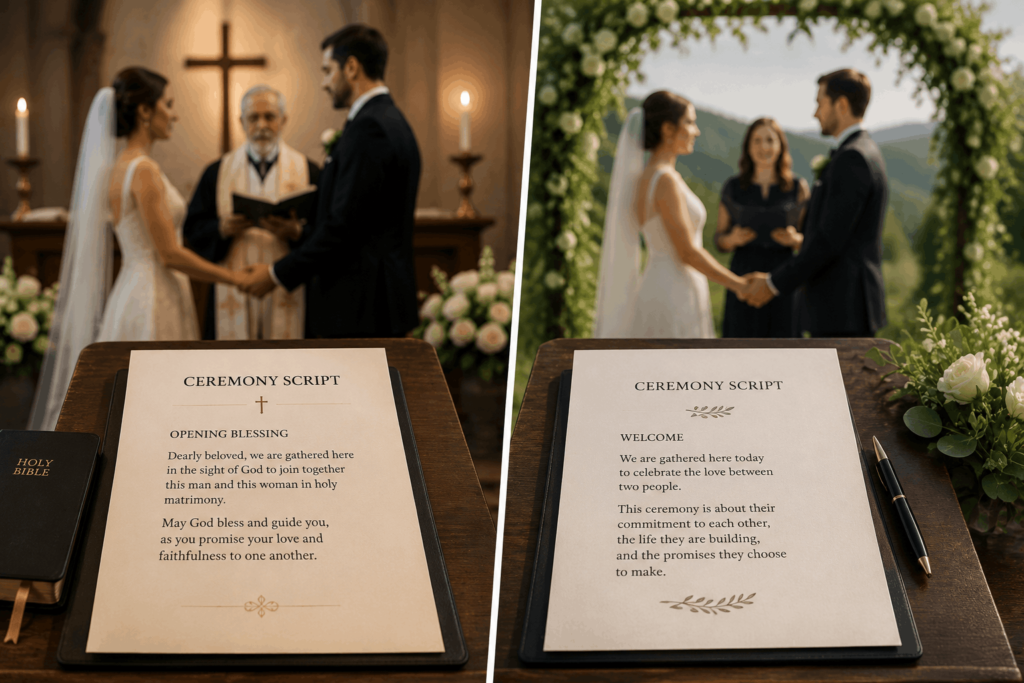
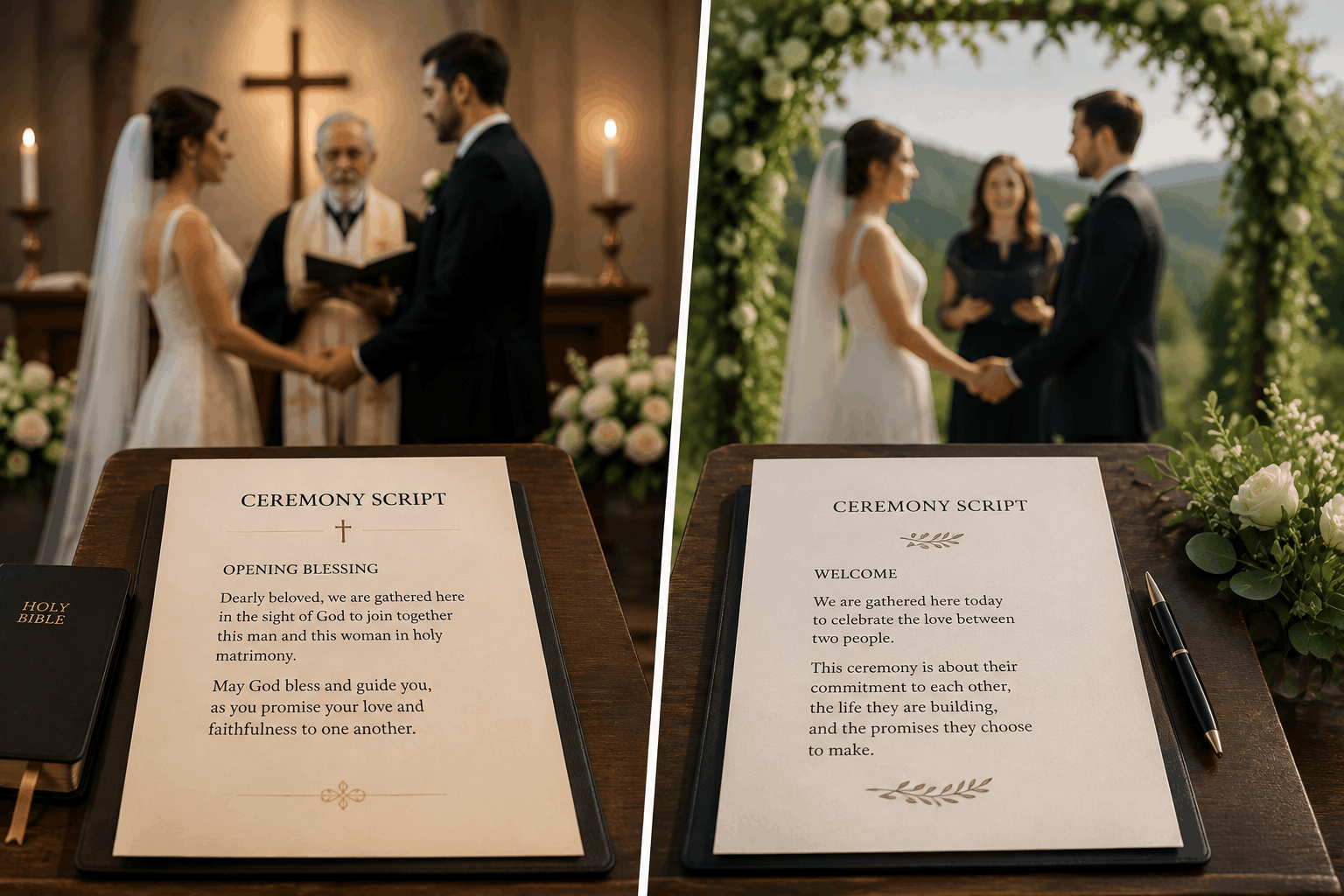
Nonreligious
No prayer, scripture, God or other religious language unless the couple specifically asks for it.
Nondenominational
Usually includes some faith or spiritual language without following one particular church or denomination.
What is a nonreligious wedding ceremony?
A nonreligious wedding ceremony leaves religion out of the script. There is no requirement that it feel cold, generic, casual, or like you’re just getting paperwork out of the way.
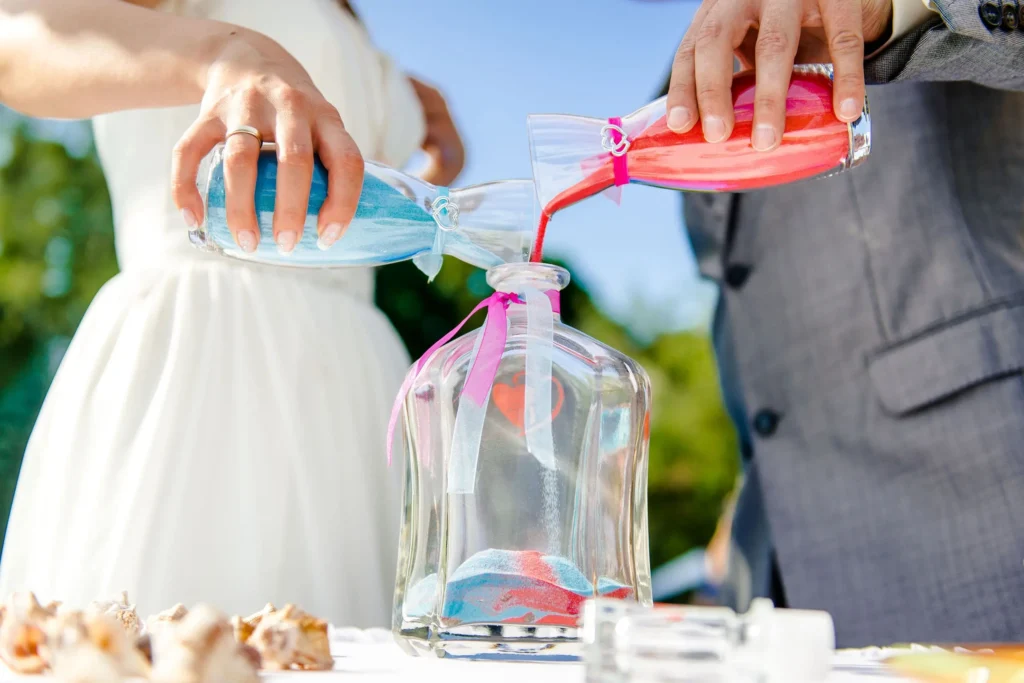
It can be funny. It can be emotional. It can acknowledge parents, children, friends, people who have died, the life you’ve already built together and the life you’re about to build. You can exchange personal vows, use readings, include a unity ceremony, tell the story of your relationship, or keep the whole thing simple.
Removing religion doesn’t remove meaning. It gives you more freedom to decide where the meaning comes from.
For some couples, that’s their relationship story. For others, it’s the promises they’re making, the people standing around them, a reading that has nothing to do with scripture, or one ordinary little detail about their life together that makes everyone in the room recognize them.
What is a nondenominational wedding ceremony?
Nondenominational usually means the ceremony is not tied to a specific religious denomination. In wedding planning, it often means there is still some faith language—God, a blessing, prayer, scripture or a spiritual reference—but without following the rules or liturgy of a particular church.
But “usually” is important. The term is used loosely enough that you should never assume your officiant means exactly what you mean.
If you want God mentioned once but don’t want a church service, say that. If you want a prayer but no scripture, say that. If you want absolutely nothing religious, say that too. Ten seconds of clarity before the ceremony is written can prevent a very uncomfortable surprise while you’re standing in front of everyone you know.
Can a nonreligious ceremony still feel spiritual?
Of course. Religious and spiritual aren’t necessarily the same thing.
A couple can want a moment to slow down, breathe and recognize the enormity of what they’re doing without invoking God. They can acknowledge nature, gratitude, family, love, chance, commitment or whatever they believe gives life meaning.
And some couples don’t want anything spiritual either. That’s fine. A wedding ceremony doesn’t need to imitate religion to earn its emotional weight.
What if one person is religious and the other isn’t?
This is where the labels become even less useful. Don’t start by trying to decide whether the ceremony is technically “nonreligious” or “nondenominational.” Start by deciding what each of you is comfortable hearing.
Maybe one person wants a short blessing because faith is important to them and the other is perfectly comfortable with that. Maybe a parent or grandparent gives a religious reading while the rest of the ceremony stays secular. Maybe the couple decides religion doesn’t belong in their ceremony at all.
There isn’t a universal compromise that works for every couple. The ceremony should sound like an honest representation of the two people getting married, not a committee project designed to satisfy every guest.
What does a nonreligious wedding ceremony actually include?
There isn’t one required script. That’s part of the appeal.
What you shouldn’t do is start adding pieces simply because a wedding ceremony outline says they’re supposed to be there. Three readings aren’t automatically better than one. A unity ceremony isn’t mandatory. A long story isn’t more personal just because it’s long.
The goal is for the guests to hear the ceremony and think, that’s them.
The label matters less than making sure the ceremony sounds honest to the two people getting married.
How do you make a nonreligious ceremony meaningful?
Don’t replace religious language with generic language. Replace it with something true.
Ask how they met. Ask what changed when the relationship became serious. Ask what they love about each other that isn’t obvious from their dating profile. Ask what their life looks like on an ordinary Tuesday. Listen for the detail that makes one of them laugh before they even finish answering.
You don’t have to use everything. In fact, you shouldn’t. The useful details are the ones that reveal something about the relationship and make the people listening recognize the couple.
That’s also why delivery matters. A beautiful sentence buried in a monotone isn’t going to land the same way. Pause when something deserves room. Look at the couple. Let people laugh. Don’t race through the emotional parts because you’re nervous about silence.
Nonreligious doesn’t mean against religion
This distinction matters.
Choosing a nonreligious wedding isn’t a statement against people who believe in God. It usually means religion isn’t part of this couple’s life, so putting religious language into one of the most personal moments of their wedding would feel artificial.
Religious couples should have ceremonies that reflect their faith. Couples who aren’t religious should be able to have ceremonies that reflect them just as honestly.
Neither needs an apology.
Get the rehearsal guide
Enter your email to receive Matt’s rehearsal guide plus additional wedding readings, tips, and tricks learned over years of officiating.
Download rehearsal guide
No spam. Unsubscribe anytime.
Where to go from here
Need words to build from?
My ceremony material gives first-time officiants modern selections for welcomes, readings, vows, ring exchanges, unity ceremonies and pronouncements so you can build a ceremony around the couple instead of starting with a blank page.