Wedding officiant legality
Asking your favorite person to officiate your wedding is the easy part. Making sure they can legally marry you is the part worth checking twice.
One of the coolest things about modern weddings is that couples don’t have to choose a stranger to stand up there and marry them. Many people would rather have a friend, family member, or someone who’s been part of their story officiate the ceremony.
Yes, more often than not, a friend can officiate your wedding. The important word is “often.” Marriage laws are different depending on where you’re getting married, and some locations require more than simply being ordained online.
There is an important distinction between someone being willing to stand up there with you and someone being legally authorized to solemnize the marriage where the ceremony will take place.
Marriage laws are state laws, and some states or local jurisdictions add registration or documentation requirements for officiants. So I would never tell a couple, “Your friend got ordained online, you’re all set,” without checking the rules for the place they’re actually getting married.
This page is general information, not legal advice. Marriage laws and local procedures can change. Before the wedding, verify the current requirements with the government office that handles marriage licenses where the ceremony will take place.
Who can legally officiate a wedding?
Every state defines the people who are authorized to solemnize a marriage. That commonly includes categories such as clergy, judges and certain public officials. An ordained minister may also qualify, but what that minister needs to do before the ceremony depends on the jurisdiction.
That’s why the location of the wedding matters more than where the officiant lives. If you live in Arizona and you’re flying to New York to officiate your sister’s wedding, New York’s requirements are the ones you need to understand.
American Marriage Ministries currently maintains a state by state marriage law database and notes that a number of states and territories require some form of officiant registration before performing a marriage. Universal Life Church makes the same basic point in its guidance that ordination alone may not be the only step, and requirements can vary by state and county.
Use those resources to understand what questions to ask, but for the final answer, verify with the appropriate government office.
Can a friend officiate your wedding?
Yes, often a friend can officiate your wedding. This is one of the reasons online ordination became so popular in the first place. A couple can ask someone who actually knows them to lead the ceremony instead of hiring a stranger simply because that person has credentials.
But the word “often” matters. The legal requirements still depend on where the wedding takes place, and the person you choose needs to make sure they are actually authorized to perform the ceremony before the big day arrives.
That can be wonderful. I’ve spent more than 19 years officiating weddings, and I can teach someone ceremony structure and delivery. I cannot manufacture the history a brother, sister, college roommate or lifelong friend already has with the couple.
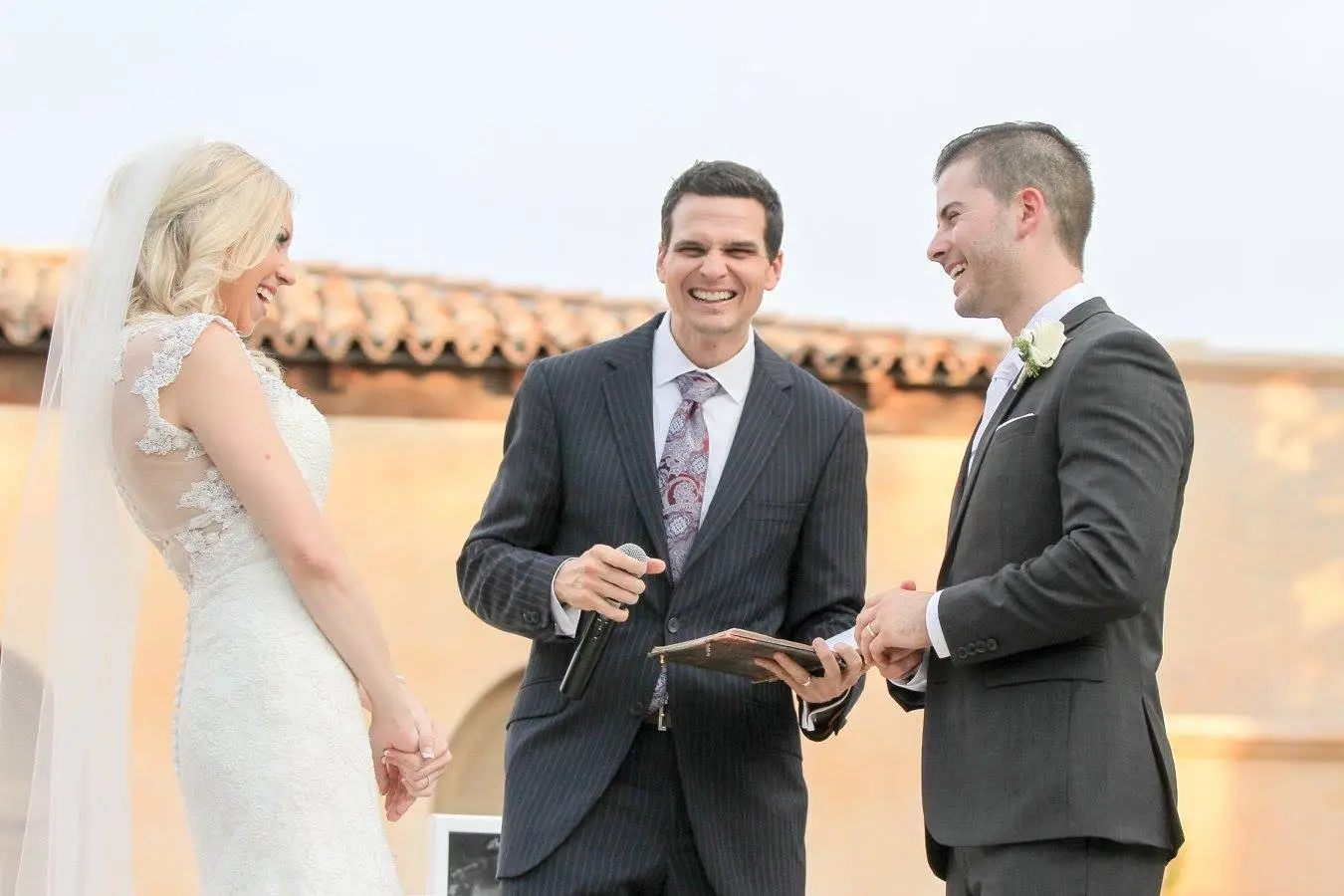
But knowing the couple isn’t enough to make the marriage legal. Your friend still needs to fall within a category of officiant recognized where the wedding takes place and complete any required registration or paperwork before the ceremony.
Can a family member officiate a wedding?
The fact that someone is related to you generally isn’t the issue. The question is whether that person is legally authorized to solemnize the marriage in that jurisdiction.
So if Dad, your sister, Uncle Mike or your cousin is the person you want standing with you, start with the same question you would ask about any other officiant: What does this state require, and does the city or county require anything else before the wedding?
Does getting ordained online make you a legal wedding officiant?
Online ordination can be the route that allows a friend or family member to qualify as an officiant, but don’t confuse “I got ordained” with “I have completed every legal requirement for this wedding.”
Online ordination organizations can help you understand the process, but don’t let the certificate become the finish line. The important question is still whether the person standing up there is legally allowed to perform the ceremony where the wedding takes place. That’s the part I don’t want you skipping.
Virginia is a good example of why sweeping claims are dangerous. Current guidance from American Marriage Ministries specifically treats Virginia differently from the rest of the country, and ULC’s Fairfax County guidance says its ordination is not accepted there. That is more useful than an old blog post telling you online ordination “works in 47 states” and leaving you to figure out what happens next.
If you need the ordination part, I walk through it separately in how to get ordained to perform weddings.
Do you have to register before officiating a wedding?
Sometimes.
Some jurisdictions require an officiant to register or provide credentials before performing the ceremony. Others don’t. There may also be rules about the marriage license itself, required declarations during the ceremony, witnesses, signatures and who returns the completed license.
I prefer a very boring phone call before the wedding over a very exciting legal surprise after it.
Contact the office responsible for marriage licenses where the wedding will happen. Tell them who you are, how you became ordained or otherwise authorized, and that you’re preparing to officiate a wedding.
Ask these questions before you hang up
- Does my ordination or other authorization qualify me to officiate this wedding here?
- Do I need to register as an officiant?
- What documents do you need from me?
- Is there a registration deadline?
- Is any specific wording legally required?
- Who needs to sign the marriage license?
- Who returns the completed license, and when?
Then write down the answers. I prefer a boring checklist before the wedding to trying to remember a phone conversation afterward.
Do you need to buy ordination credentials?
Maybe. Don’t buy a pile of official looking paperwork just because an ordination website puts it in front of you.
Find out what your jurisdiction actually requires first. If they need an ordination certificate, letter of good standing or other documentation, get what they require. If they don’t, you may not need to spend the money.
Being legal is the beginning, not the job
This is the part I care about more.
Getting ordained can take minutes. The wedding is the thing the couple is going to remember.
And this is where many first-time officiants realize they have a bigger question than whether they are allowed to perform the ceremony. They start wondering what they’re actually supposed to say, how long the ceremony should be, how to make it personal without making it awkward, and what happens when the plan changes on the wedding day.
The legal part matters. It has to be handled correctly. But the legal part is only what allows you to stand up there. Preparation is what allows you to look like you belong there.

Once the legal requirements are handled, you still have to figure out what the ceremony should sound like, what the couple wants, how personal they want it to be, whether they’re writing vows, what happens with the rings, where everybody stands, how the rehearsal works, how to use a microphone, how to look up from the script, and what to do when something happens that wasn’t in the plan.
That’s why I rebuilt my complete guide to officiating a wedding for the first time around the whole job, not just the ceremony script.
You don’t have to turn into a professional wedding officiant overnight. You don’t have to personalize every paragraph. You do need to be prepared enough that the couple can enjoy their ceremony instead of wondering whether you know what happens next.
Get the rehearsal guide
Enter your email to get my printable rehearsal guide plus extra officiant tips and practical wedding day advice.
Download rehearsal guide
No spam. Unsubscribe anytime.
What should a first time officiant do next?
Once you’ve confirmed that you’re legally allowed to officiate, stop worrying about the title “minister” and start preparing for the actual wedding.
What should an officiant wear?
Ask the couple.
Seriously. Don’t turn this into a fashion theory problem. Find out how formal the wedding is, what the wedding party is wearing and whether the couple wants you coordinating with them or simply looking neutral and polished.
Your clothes should make sense in the photographs without becoming a conversation. If everyone standing beside you is in formalwear, don’t show up looking like you’re headed to brunch. If it’s a casual backyard wedding, you probably don’t need to look like you’re arguing a case before the Supreme Court.
The couple gets the final vote.
Can anyone officiate a wedding?
Not literally anyone, anywhere, with no preparation. That’s the answer I trust more than a catchy “yes.”
A friend or family member can often become legally qualified to officiate a wedding, including through online ordination, but the requirements depend on the law where the wedding takes place. Some jurisdictions require registration or documentation. Some treat particular forms of ordination differently. The marriage license also comes with its own instructions.
Verify those things first.
Then prepare to make the ceremony personal, calm, and memorable for the couple and the people sharing it with them.
Legal? Good. Now make the ceremony sound like you belong up there.
I’ve taken the ceremony material I’ve written and refined over more than 1,000 weddings and built it for first-time officiants. Use as much or as little as you want, then make it fit the couple standing in front of you.