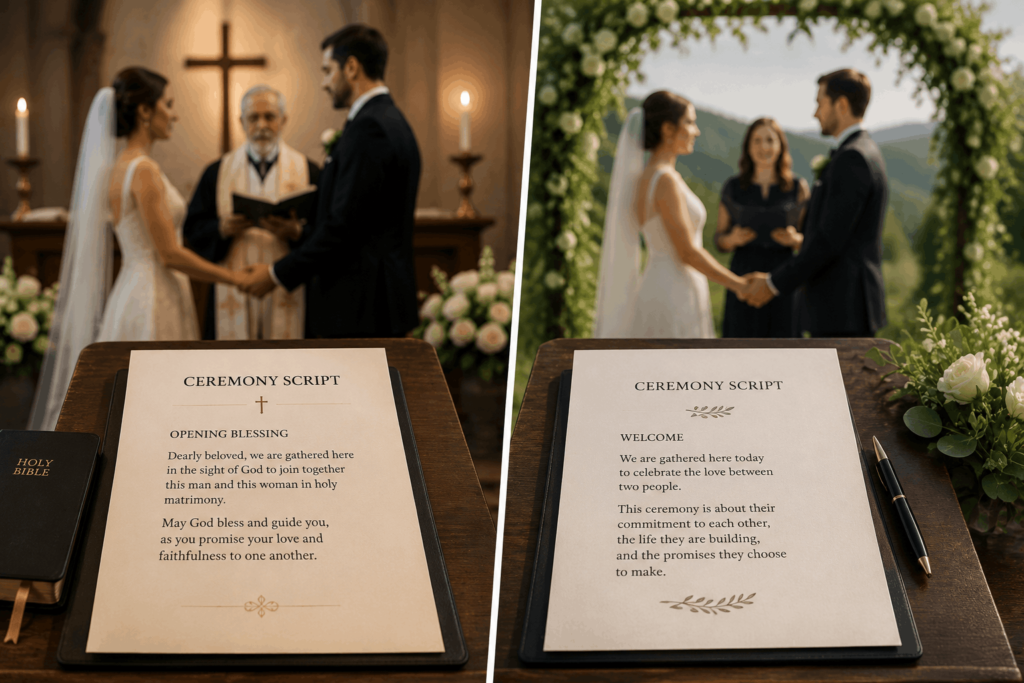
A great ceremony script helps. It isn’t what people notice first.
Wedding guests don’t know what you planned to say. They know whether you look comfortable, sound sincere and make the couple feel like they’re in good hands.
I’d love to tell you that great ceremony material is all you need to do a great job officiating a wedding. It isn’t.
You can have beautiful words in front of you and still bury your face in the page, hold the microphone at your belly button and sound like you’re reading the terms and conditions for a new credit card.
On the other hand, you don’t need to be a professional speaker. The couple isn’t expecting one. They want the person they trusted with their wedding to look prepared, sound like themselves and be present.
What the couple notices about you
They can tell when you’re actually with them
Look at the couple. Smile at them. Listen when they’re speaking instead of staring down at the next paragraph you’re supposed to read.
You don’t need to memorize the ceremony. I don’t. You need to know it well enough that you can leave the page for a few seconds and come back without getting lost.
If I’m feeling nervous or my brain starts moving too fast, I squeeze my feet inside my shoes and take a full breath. Nobody can see it. It puts me right back in the room.
Speak to them instead of reading at them
There’s a huge difference between reading words and saying them to someone.
Practice the ceremony out loud until you know where you naturally want to slow down, where a sentence needs some weight and where you can look up. I mark my pages so I can find my place quickly after making eye contact.
The goal is to sound like you’re talking to people, not like you’re reading something to them.
What the wedding guests notice
They notice delivery even if they don’t know they’re noticing it
If every sentence comes out at the same speed and volume, even good material starts to sound flat.
Change your pace. Let an important sentence breathe. Get a little quieter when the moment calls for it. Use your normal conversational voice instead of suddenly becoming Reverend Wedding Voice because somebody handed you a microphone.
A two second pause feels enormous when you’re standing up there. To everybody listening, it looks comfortable.
Your forehead shouldn’t officiate the wedding
If the guests spend the whole ceremony looking at the top of your head, you’re too attached to the page.
Read a thought, look up and say it to somebody. Sometimes that’s the couple. Sometimes it’s the guests. Then come back to the script.
You don’t have to make eye contact with every person in the room. Just don’t disappear into your ceremony book.
Look like you’re happy to be there
Smile when it’s appropriate. Stand up straight. Keep your shoulders relaxed. Look at the couple’s parents and families once in a while so they feel included too.
This doesn’t mean grinning through an emotional reading. It means letting your face match what’s happening instead of wearing the same expression for 20 minutes.

What the other wedding professionals notice
The couple and guests aren’t the only people watching. The DJ, photographer and coordinator can usually tell pretty quickly whether you’ve done this before.
Can everyone hear you?
Do a sound check before the ceremony. If you’re using a handheld microphone, keep it close to your mouth. As people get comfortable, they tend to let the microphone slowly drift toward their chest.
The guests in the back don’t care that holding it close feels weird. They care that they can hear the wedding.
Get out of the kiss photo
When you pronounce the couple married and they kiss, move.
The photographer wants the couple in that photo, not the couple plus your smiling head floating between them. Don’t be creepy and photobomb their kiss.
Be easy to work with
Show up early. Know the plan. Ask questions before guests are seated instead of creating problems once the ceremony starts.
And when somebody hands you the marriage license, read it before writing on it. I’ve written the right information in the wrong place and I’ve written the wrong date. Both are a pain in the butt.
The stuff people notice without realizing it
You don’t need to look like a professional officiant
If you’re officiating for a friend or family member, nobody expects you to look like you’ve done 1,000 weddings.
They do expect you to have prepared.
That’s the difference. Practice enough that you can stop thinking about yourself once the ceremony begins. Then pay attention to the couple, speak to the room and let the moment happen.
The best compliment isn’t that everybody thought you were a professional officiant. It’s that the couple felt like asking you was exactly the right decision, and that when they remember the ceremony years later, they remember how it felt rather than how nervous you were about getting it right.
Get the rehearsal guide
Enter your email and I’ll send you my printable rehearsal guide plus practical officiant tips, readings and wedding day advice.
Download rehearsal guide
No spam. Unsubscribe anytime.
What to read next
Want to practice the delivery, not just read about it?
My officiant training shows you how I deliver each part of a ceremony, with audio, video and marked-up cheat sheets that make it easier to look up without losing your place.
What makes a good wedding officiant?
Do I need to memorize the wedding ceremony?
No. Practice it enough that you can look up regularly, make eye contact and return to the page without getting lost.
How can I sound more natural while officiating?
Practice out loud, vary your pace and volume, and speak each thought to the couple or guests instead of simply reading words from the page.
Where should I look during the ceremony?
Move naturally between the couple, the guests and your script. You don’t need constant eye contact, but you shouldn’t spend the ceremony looking down.
How close should I hold the microphone?
Close enough that you were clearly audible during the sound check. Don’t let a handheld microphone drift toward your chest as you get comfortable.
What should the officiant do during the wedding kiss?
Move out of the photographer’s shot before the kiss so the couple gets a clean photo of the moment.